Industries We Serve
Built for the assets that cannot afford a surprise.
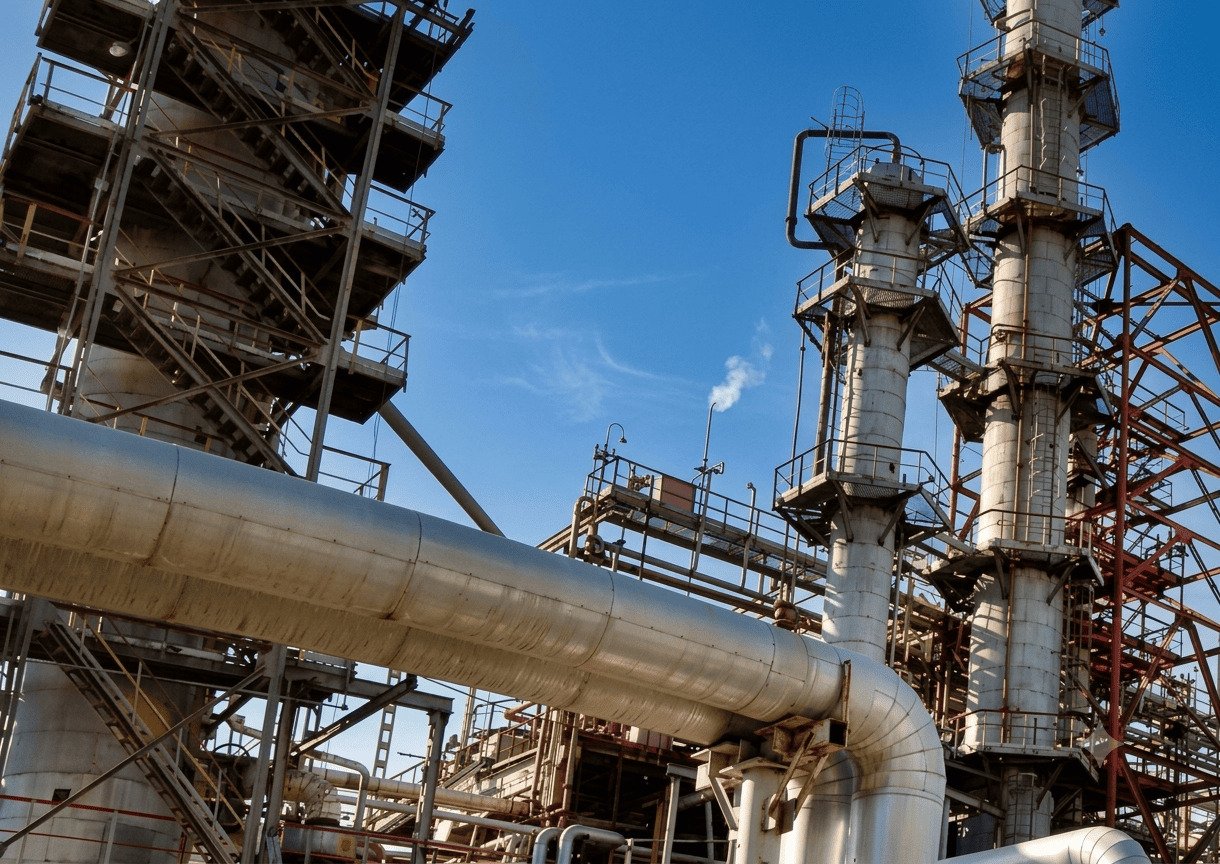
Refineries, chemical plants, power stations and heavy industry. Different assets, different damage mechanisms — the same requirement for inspection data that holds up.
Sector ExperienceOil & gas, petrochemical, power, manufacturing.
01 — Industry
Oil, Gas & Refining
Refineries, storage terminals and midstream pipelines.
Assets we inspect
- Crude and vacuum units, heater passes and transfer lines
- Hydrotreaters, hydrocrackers and catalytic reformers
- Process piping circuits and condition monitoring locations
- Above-ground storage tanks, shells, floors and annular plates
- Midstream pipelines, girth welds and pig traps
- Flare stacks, columns and elevated structures
Damage mechanisms
- Sulphidation and high-temperature thinning
- High-Temperature Hydrogen Attack (HTHA)
- Wet H₂S damage, HIC and SOHIC
- Erosion and flow-accelerated corrosion
- Corrosion under insulation
- Weld fabrication defects
Methods applied
- Phased Array Ultrasonic Testing
- Encoded corrosion mapping
- TOFD weld examination
- HTHA assessment
- MT and PT with rope access
02 — Industry
Petrochemical & Chemical Processing
Vessels, reactors and process piping.
Assets we inspect
- Pressure vessels, reactors and columns
- CRA-clad and weld-overlay protected equipment
- Process piping and interconnecting systems
- Heat exchangers, reboilers and condensers
- Dissimilar metal welds and transition joints
- Storage and intermediate product tanks
Damage mechanisms
- Chloride and caustic stress corrosion cracking
- Clad and overlay disbonding
- Localised pitting and under-deposit attack
- Thermal fatigue cracking
- Erosion in two-phase and slurry service
- Weld root and fusion defects
Methods applied
- PAUT on clad and dissimilar welds
- Eddy current array on surfaces
- IRIS and ECT on bundles
- Penetrant testing on stainless
- Volumetric UT and TOFD
03 — Industry
Power Generation & Utilities
Boilers, condensers and high-energy piping.
Assets we inspect
- Water-tube and fire-tube boilers
- Surface condensers and feedwater heaters
- High-energy steam piping, headers and welds
- Economisers, superheaters and reheaters
- Turbine hall structural steel and supports
- Balance-of-plant piping and tanks
Damage mechanisms
- Creep damage in high-energy piping
- Flow-accelerated corrosion
- Boiler tube waterside and fireside wastage
- Condenser tube pitting and erosion
- Thermal fatigue at attachments
- Weld heat-affected zone cracking
Methods applied
- IRIS and eddy current on tubes
- UT and PAUT on high-energy welds
- Encoded corrosion mapping
- MT on headers and attachments
- Rope access inspection
04 — Industry
Heavy Manufacturing & Pulp & Paper
Structural steel, digesters and heavy machinery.
Assets we inspect
- Digesters, liquor tanks and pressure vessels
- Structural steel, crane runways and load-bearing members
- Heavy weldments and fabricated assemblies
- Shafts, rolls, couplings and rotating equipment
- Lifting equipment, padeyes and rigging points
- Process piping and utility systems
Damage mechanisms
- Caustic and sulphide corrosion in digesters
- Fatigue cracking in structural connections
- Weld defects in new fabrication
- Erosion and mechanical wear
- Overload and impact damage
- Corrosion under insulation and lagging
Methods applied
- MT and PT on structural connections
- PAUT and UT on heavy weldments
- Thickness surveys and mapping
- Rope access on crane structures
- Fabrication surveillance
Across Every Sector
What stays the same.
Whatever the industry, the discipline behind the inspection does not change.
- Scope built from the damage mechanism, not a standard template
- Procedures written to the governing code or your written practice
- Calibration verified and recorded for every setup
- Data referenced so the next inspection can be trended against it
- Reporting issued in a format your integrity team can use
- Safety and permit discipline before schedule, every time